
Review · ROME
Vespa Tour – The Essence of Rome
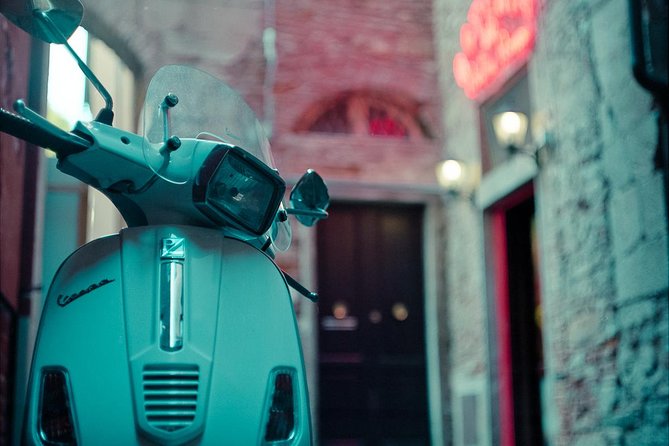
Rome reveals itself quickly from a Vespa. In three hours, you can pass the Colosseum, Trevi Fountain, Pantheon, and St. Peter’s Square, then slip through smaller streets that a bus cannot reach. The guide leads while you ride, stopping often for brief explanations and photographs.
I like the efficient route and the private format, which lets your group see a lot without following a large crowd. I also like the human touch: guides such as Marco, Vittorio, Ricardo, and Alexander have been praised for their history knowledge, good humor, and willingness to adjust the pace. The catch is serious: Rome traffic demands real scooter experience, not just a desire to try one.
Key points to know before you book
- Three hours covers Rome’s greatest hits: You see ancient ruins, Baroque fountains, grand churches, lively squares, and the Vatican area in one compact ride.
- You ride the Vespa yourself: Choose one or two riders per scooter, with helmets and fuel included.
- A city-scooter license is required: You need a B driver’s license, plus an International Driving Permit if you are a US citizen.
- The tour stays mostly outside: You receive explanations at major sights, but entrance tickets and extended visits inside are not part of the experience.
- The guide makes the difference: Marco, Vittorio, Ricardo, and Alexander are among the guides named in feedback, with special praise for clear explanations and friendly energy.
- The tour returns to its starting point: Hotel pickup, drop-off, food, and drinks are not included.
Why a Vespa works so well in central Rome
Rome is a city of grand monuments separated by short but awkward distances. Walking between the Roman Forum, Spanish Steps, Pantheon, and St. Peter’s Square takes time and energy. A taxi can cover the ground, but it gives you little sense of the streets between the sights.
A Vespa offers a middle path. You are close to the city, exposed to its sounds and movement, yet you cover far more ground than you could on foot. You get the pleasure of passing through Rome’s old quarters rather than simply being dropped at one landmark after another.
This is not a lesson in how to ride a scooter. You need strong experience in city traffic before booking. Roman streets can be narrow, busy, and confusing, and the tour’s own instructions make clear that basic confidence is not enough. If you already ride motorcycles or scooters in traffic, the experience can feel wonderfully natural. If you do not, choose a walking tour, a car tour, or a scooter with a professional driver instead.
You can ride alone or share one Vespa with another person. That choice matters. A solo rider has more control and may feel less pressured in traffic. Two riders can lower the per-person cost of the scooter arrangement and make the outing more social, but the driver still needs to be fully comfortable with the machine.
More Vespa Tours in Rome:
- Vespa Sidecar Tour By Night with Pickup
★ 5.0 · 1,803 reviews - Rome Morning Vespa Sidecar Tour in Rome with Cappuccino
★ 5.0 · 1,771 reviews - Rome: Explore the City by Vespa with an Optional Photoshoot
★ 5.0 · 1,103 reviews
Starting near Largo Argentina and getting moving
The ride begins at the BigaBike rental shop on Via di San Calisto, 9, in Rome. The provided meeting information also names Vicolo di San Nicola dè Cesarini, 4 near Largo Argentina, so confirm the exact meeting point and route instructions before you set out. The activity ends back at the meeting point.
At the start, you receive the Vespa and helmet, meet your guide, and get ready for Rome’s streets. Fuel is included, so you do not need to plan a fuel stop or sort out a rental bill during the ride.
The tour is private for your group, with a maximum of 10 people per booking. That is a useful size for a moving group. You are not joining a large convoy, and the guide can pause if your group needs to regroup. One particularly practical detail from the guide feedback is that Marco rode slowly, pulled over when needed, and waited for the group. That kind of road awareness matters more than a fast pace.
Roman ruins at the Forum, Colosseum, and Circus Maximus
The first major ancient sights are the Roman Forum and Colosseum. At the Forum, the guide points out the main ruins and explains why this area formed the heart of Ancient Rome. You do not enter the archaeological site, so expect an orientation from outside rather than a long walk among the temples and basilicas.
That limitation is also the point. The Forum covers a large area, and a full visit can take hours. Seeing it from the road gives you a useful first look, especially if you are short on time or plan to return later with an entrance ticket.
At the Colosseum, the guide explains the Flavian Amphitheatre and the nearby Arch of Constantine. You get the setting, the broad story, and a chance to see one of Rome’s most recognizable buildings without spending your three-hour ride in an admission line.
The Colosseum stop is brief, listed at about 10 minutes. I would treat it as a preview, not a substitute for going inside. If the interior is high on your list, plan a separate visit with its own ticket and time.
The route then reaches Circus Maximus, the ancient chariot-racing stadium. Its broad open space gives you a clear view toward the Palatine Hill, one of Rome’s Seven Hills. Compared with the Colosseum, Circus Maximus can feel less visually complete, since much of the site is an open urban field. Its scale, however, helps you picture the size of Roman public spectacles.
The Mouth of Truth and Rome’s older riverfront
One stop includes the medieval bell tower that is the tallest in Rome, along with the Mouth of Truth. Across the street are the Temple of Hercules Victor and the Temple of Portunus.
This is one of the more varied parts of the route. Instead of focusing on one famous monument, you see several layers of Rome close together: medieval Rome, a popular medieval legend, and surviving temples from the ancient city. The stop is also a reminder that Rome often rewards you with several periods of history in one short block.
The Mouth of Truth is best treated as a quick photo stop rather than a major site visit. The temples across the street give the guide more room to explain the ancient setting, while the bell tower adds a medieval note to the route.
Same streets, a different kind of ride:
- Rome Vespa Scooter Tour with Professional Photographer
★ 5.0 · 857 reviews - Rome: Highlights Vespa Sidecar Tour with Coffee and Gelato
★ 4.9 · 747 reviews - Rome: Vespa Ride with Pictures and Sweet Tastings
★ 5.0 · 723 reviews - Rome Afternoon Sightseeing Vespa Sidecar Tour with Gourmet Gelato
★ 5.0 · 692 reviews
Piazza Venezia, Trajan’s Column, and the city’s grand center
At Piazza Venezia, the guide brings together several important landmarks. You see Trajan’s Column, the huge Vittoriano monument, the Altar of the Fatherland with Italy’s Tomb of the Unknown Soldier, Capitoline Hill, the Church of Saint Mark, and Palazzo Venezia.
This is one of Rome’s most imposing urban spaces. It can also be visually overwhelming, with monuments, traffic, churches, and government buildings competing for attention. A guide helps you sort out what you are looking at and why the square matters.
Trajan’s Column is especially worth noting. Its carved spiral tells the story of Emperor Trajan’s military campaigns. The Vittoriano, sometimes called the Altar of the Fatherland, is a much later monument tied to modern Italy. Seeing both in one stop gives you a quick lesson in how Rome shifted from imperial capital to national capital.
Trevi Fountain and the Spanish Steps
The stop at Trevi Fountain lasts about 15 minutes. The guide explains the Baroque fountain, and you have time for the familiar coin toss over your shoulder. The fountain is free to view, but it is not a quiet place. Stay alert for other pedestrians and keep personal belongings secure while you take photographs.
The Trevi stop works well on a Vespa tour because you do not need to spend a long time finding it on foot. You arrive, hear the key story, take in the sculpture and water, and move on. If you want a slower look at the fountain, return early or late in the day on your own.
Next comes the Spanish Steps, officially the Scalinata di Trinità dei Monti. You see the stairway, the Church of the Santissima Trinità dei Monti, the Barcaccia Fountain, and the Column of the Immaculate Conception. The guide can connect the steps with the surrounding streets and monuments, giving you a better sense of the district than a single photograph would.
Remember that the steps are a public monument, not a place to sit and eat. The listed stop is about 15 minutes, enough for a look and explanation rather than a long break.
The Pantheon and Piazza Navona
The Pantheon receives about 10 minutes on the route. Your guide explains its architectural design and gives you the main story of the building. The Pantheon is one of Rome’s most rewarding landmarks, but this tour views it from outside rather than providing an interior visit.
That is an important trade-off. The outside gives you the portico, columns, and massive dome from the surrounding square. Inside, the open central oculus and unusual engineering are the main reasons to linger. If you care about architecture, schedule a separate entrance visit.
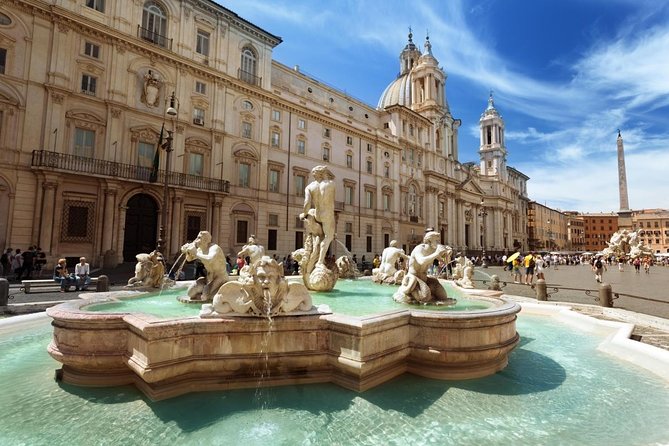
Piazza Navona offers a longer stop of about 15 minutes. You stroll through the square with the guide and see Bernini’s Fountain of the Four Rivers, the Church of Sant’Agnese in Agone, the Fountain of Neptune, and the Moor Fountain.
This is one of the best places for the guide’s storytelling because the square combines art, church history, urban design, and everyday Roman life. The fountains give you plenty to examine, while the long oval shape reveals the outline of the ancient stadium that once occupied the site.
Castel Sant’Angelo and St. Peter’s Square
At Castel Sant’Angelo, you admire the Mausoleum of Hadrian from outside. The route also crosses or approaches Ponte Sant’Angelo, known for its line of angel sculptures.
The castle has changed roles many times, but the tour keeps the visit brief and exterior. You get the dramatic view of its round mass beside the river and the bridge’s sculptures. If you want to see the interior passages, prison rooms, and upper views, you will need a separate ticket and more time.
St. Peter’s Square follows, with about 15 minutes for the square, its obelisk, Bernini’s colonnades, and an explanation of St. Peter’s Basilica. This is a good place to pause and understand the design. The curving colonnades were made to frame the square and guide the eye toward the basilica.
Again, the ride gives you orientation, not a basilica tour. Security lines, dress rules, and the scale of the church require more time than this stop allows. Treat this as a first look, then return if you want to go inside.
Campo de’ Fiori and the final stretch
The last listed stop is Campo de’ Fiori, where you can stroll through the daily market. This gives the route a more everyday ending after its long parade of emperors, popes, fountains, and monuments.
Markets change from day to day, so the atmosphere and goods can vary. The stop is listed at about 15 minutes. That is enough to look around, but not necessarily enough for a relaxed meal or serious shopping. Food and drinks are not included, so plan to eat before or after the ride rather than counting on a meal during it.
From here, the group returns to the starting point. The route covers a large portion of central Rome, but its pace is brisk. Most stops last 10 to 15 minutes, and many are viewed from outside.
What the $137.80 price buys you
At $137.80 per person, this is not the cheapest way to see Rome. The price includes the Vespa, helmet, fuel, and a professional guide. It also buys you a private activity for your own group, rather than a large shared tour.
The value depends on how you like to explore. If you want to enter the Colosseum, Pantheon, Castel Sant’Angelo, and St. Peter’s Basilica, you will need separate tickets and extra time. In that case, this ride works best as a first-day overview that helps you decide where to return.
If you have only a few days and want a personal guide to connect the major sights, the price is easier to justify. You see a remarkable number of places in three hours, and you avoid spending the whole day walking between them. The Vespa itself is also part of the experience, not just transportation.
You may find the cost less appealing if you already know Rome well, dislike traffic, or prefer long visits inside museums and monuments. The ride gives you breadth, movement, and local street views. It does not give you depth at each site.
Guides, pace, and the feel of the ride
The strongest part of this experience is the guide’s role. Marco is described as careful about pace and good at stopping for photographs. Vittorio, also spelled Victorio in some feedback, is praised for his enthusiasm, engaging style, and lively sense of humor. Ricardo is identified as the shop owner and host, with a friendly approach. Alexander has guided in English and German and is noted for adapting the ride to the group.
You should not assume a particular guide will be assigned, but these details show what to look for: clear history, safe group handling, photo stops, and flexibility. The best guide will not simply name monuments. The guide will help you connect the ancient ruins, papal landmarks, political monuments, and ordinary streets into one picture of Rome.
The route is designed to keep moving, but the guide can pull over when needed. That matters if one rider is less confident or if the group gets separated. You should still be ready to manage the scooter yourself. No guide can remove the demands of Rome traffic.
Practical details that can make or break the day
The minimum age is 21. You need a B driver’s license, and US citizens need an International Driving Permit. The operator also requires strong experience driving scooters in city traffic.
Dress is smart casual. Since you will be riding outdoors and stopping at religious and historic sites, choose clothing that lets you move comfortably while still looking suitable for churches and central Rome. Helmets are provided.
The tour is offered in English. One guide has also been noted as speaking German, but German should not be treated as guaranteed for every departure.
Confirmation arrives at booking, and free cancellation is available up to 24 hours before the start time. Changes or cancellations inside that 24-hour window are not accepted for a refund. The activity is near public transportation, but hotel pickup and drop-off are not included.
Who should book this Rome Vespa tour
I would choose this tour if you can already ride a scooter confidently in city traffic and want a fast, personal introduction to Rome. It is especially useful early in a short stay, when you want to see the major districts before deciding where to spend more time.
It also suits couples or small private groups who prefer movement over long guided walks. The mix of ancient ruins, fountains, churches, markets, and streets gives you a broad picture in a short period.
I would skip it if you are a nervous rider, have little scooter experience, or want to spend time inside every major monument. The tour does not replace visits to the Colosseum, Pantheon, Vatican, or Castel Sant’Angelo. It helps you see where those places fit within the city.
Should you book it?
Book the Vespa Tour, The Essence of Rome if the ride itself sounds as appealing as the sightseeing. You get Rome’s major landmarks, a private guide, a flexible small group, and the thrill of moving through the city on two wheels.
Do not book it simply because you want a shortcut around the ticket lines. Most stops are brief and outside, and Rome traffic is part of the bargain. For a confident rider who wants history, photos, street life, and a guide with personality, $137.80 can be a fair price for an efficient first look at the Eternal City.
FAQ
How long does the Vespa tour last?
The tour lasts approximately three hours.
What is included in the price?
The price includes use of the Vespa, helmets, fuel, and a professional guide.
Can two people share one Vespa?
Yes. You can choose to ride one or two people per scooter.
Do I need a driver’s license?
Yes. A B driver’s license is required. US citizens need an International Driving Permit.
Does the tour go inside the Colosseum, Pantheon, or St. Peter’s Basilica?
No. The route provides outside views and guided explanations at these sights. Admission tickets are not included.
Where does the tour start and finish?
The activity starts at BigaBike, Rent Scooter Rome, on Via di San Calisto, 9, in Rome, and ends back at the meeting point. The supplied meeting information also names Vicolo di San Nicola dè Cesarini, 4, so confirm the exact starting address before departure.
Fresh on the road in Rome
- Vespa Tour with Professional Photographer★ 4.9 · 9 reviews
- Vespa Sidecar Tour : Rome by Night★ 4.1 · 7 reviews
- Rome: Vespa Tour with Gelato and Photos★ 4.9 · 7 reviews
- Vespa Tour – Explore Ancient Rome★ 5.0 · 5 reviews
- Food tour & Vespa tour & Photo tour! All included★ 5.0 · 2 reviews
- Vespa Scooter Tour “Rome as a Local”★ 5.0 · 12 reviews
- Vespa Sidecar Tour: Highlights of Rome★ 4.7 · 10 reviews
- Rome by night on Vespa★ 4.9 · 11 reviews
Rome Vespa Tours, side by side.
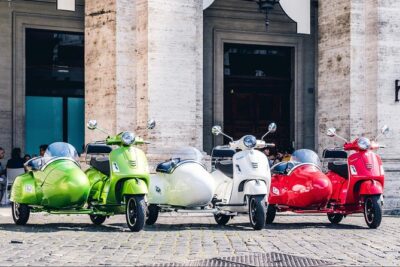
Rome Morning Vespa Sidecar Tour in Rome with Cappuccino
Read our review →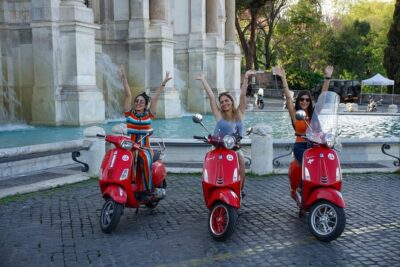
Rome: Explore the City by Vespa with an Optional Photoshoot
Read our review →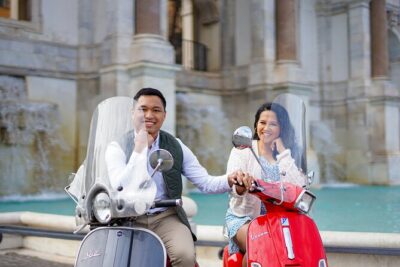
Rome Vespa Scooter Tour with Professional Photographer
Read our review →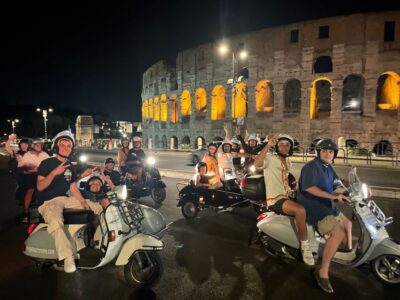
Rome: Highlights Vespa Sidecar Tour with Coffee and Gelato
Read our review →
Rome: Vespa Ride with Pictures and Sweet Tastings
Read our review →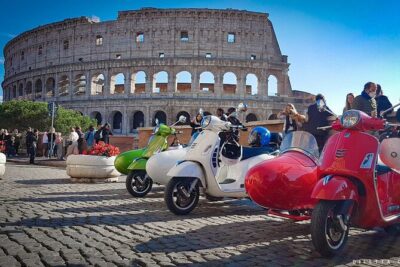
Rome Afternoon Sightseeing Vespa Sidecar Tour with Gourmet Gelato
Read our review →
Rome: Vespa Tour with Photo services Small‑Group Highlights
Read our review →This ride also sits on