Review · HANOI
Vespa Sidecar Sightseeing and Cuisine Tour in Hanoi
Hanoi makes more sense from the back of a Vespa sidecar than through a tour-bus window. You move from the Opera House to markets, temples, train tracks, and tiny Old Quarter lanes while the guide explains what you are seeing. I like the wide range of neighborhoods and the chance to taste local food along the way.
I also like that this is a private tour for your group, not a large convoy, and that lunch and bottled water are included. The main drawback is the traffic and weather: Hanoi’s roads can feel intense from a sidecar, and the tour requires good weather. Train Street access can also change because local authorities have restricted parts of it.
Key points at a glance
- A citywide route: Cover the Opera House, Presidential Palace area, train street, Imperial Citadel, West Lake temples, Old Quarter, and Hoan Kiem Lake.
- A private sidecar ride: Only your group participates, giving you a more personal way to move through Hanoi.
- Food is part of the plan: Lunch is included, while market snacks and egg coffee cost extra.
- English-speaking guidance: The guide provides historical and cultural explanations throughout the route.
- A full half-day: Allow about 4 hours 30 minutes, including stops, photographs, food, and the return to the starting point.
- Weather matters: You can cancel for a full refund up to 24 hours before departure, but last-minute cancellations are not refundable.
Why a Vespa sidecar works well in Hanoi
Hanoi is not a city you understand by checking off monuments. Its appeal is in the quick changes. One minute you are beside a grand colonial building. Soon after, you are passing a market, a temple gate, a rail line, or a crowded lane where daily life happens inches from the road.
A Vespa sidecar gives you that close-up view without asking you to navigate Hanoi’s traffic yourself. You sit beside or behind the driver while the guide handles the route. The ride is part sightseeing and part transport, so you spend less time getting between sights and more time seeing how the city fits together.
The private format is especially useful. You are not tied to the pace of a large group, and the guide can give explanations and photo stops to your party. The route is broad rather than museum-heavy, so I would choose it early in a Hanoi stay. It gives you a useful first look at several parts of the city.
The experience is not quiet. Hanoi traffic is noisy and fast-moving, and a sidecar leaves you exposed to heat, wind, and rain. The available feedback describes the sidecar as clean, comfortable, and safe, but you should still be ready for a lively ride rather than a polished sightseeing vehicle.
More Vespa City Highlights Tours in Hanoi
- Vespa City Tour &Train Street Female With Ao Dai Riders 4,5 Hours
★ 5.0 · 314 reviews - Discovery Inside Ha Noi City Tour By Vespa
★ 5.0 · 35 reviews - Hanoi 4.5-Hour Vespa Tour city tour
★ 4.7 · 18 reviews
Starting near Hang Tre and the Hanoi Opera House
The meeting point is at 3 P. Hàng Tre in the Lý Thái Tổ area of Hoàn Kiếm. Pickup is offered, but the stated meeting point is the clearest place to plan around. You receive confirmation when booking, and the activity returns to this same meeting point.
The first formal stop is Hanoi Opera House, with about 25 minutes for the visit and explanation. The building gives you an immediate introduction to Hanoi’s French colonial layer, while the surrounding streets show how that older architecture sits beside modern city life.
The route also passes the Presidential Palace area. You do not go inside, but the guide gives historical information as you pass. This is a useful distinction: the tour is designed for outside views, stories, and photographs, not extended interior visits.
If you want long museum visits or detailed architectural study, this opening section may feel brief. If you want orientation and a look at Hanoi’s major civic landmarks, the pace works well.
Markets and the changing rules around Train Street
After the Opera House, the sidecar heads toward an outdoor market. The guide introduces the area, and you get a look at the everyday shopping side of Hanoi rather than only the city’s formal sights.
The route then goes toward the famous railway street. Access to Train Street has been restricted by local authorities, so conditions can change. The tour information says the route will take you there, but you should not assume that every section will be open for unrestricted walking or that a train will pass during your visit.
This is also where snacks and egg coffee are available for purchase, but they are not included in the $55 price. That is worth remembering if you want to sample them. Bring some spending money, and treat the food stop as an optional extra rather than part of the included lunch.
The market and rail area are valuable because they show Hanoi as a working city. They also bring the most uncertainty. Streets may be controlled, crowded, or changed at short notice, and the sidecar may not stop exactly where you imagine from photographs online.
The Imperial Citadel’s North Gate
The tour stops at the North Gate of the Imperial Citadel of Thang Long for about 20 minutes. You do not enter the citadel, but the guide explains its history and takes photographs.
That short stop is best understood as an exterior history lesson. The North Gate gives you a strong visual marker and helps connect modern Hanoi with the city’s older political center. Since admission is not part of the stop, do not book this tour expecting a full archaeological visit.
I like this kind of brief exterior stop when it is paired with a wider city route. You see a landmark, learn why it matters, and keep moving. If the citadel is high on your personal list, plan a separate visit when you can spend more time inside.
More Vespa City Highlights Tours in Vietnam
- Hanoi Highlights Half-day Vespa Tour: REAL Hanoi, Culture & Food
★ 5.0 · 16 reviews - Vespa Sidecar Sightseeing Tour in Hanoi
★ 4.5 · 6 reviews - Hanoi: Food and Sightseeing Vespa Tour with 7 Tastings
★ 5.0 · 2 reviews - Hanoi Hidden Gems: Jeep, Vespa or Motorbike Tour
★ 5.0 · 2 reviews
Phu Tay Ho and the traditions of worship
Phu Tay Ho introduces a different side of Hanoi. The guide explains Vietnamese worship culture, and you may join in some activities in the way local people do or simply look around the temple.
The value here is cultural context. A temple can look like a quick photo stop if you do not know what you are seeing. An explanation of worship practices and local customs gives the setting more meaning, even during a short visit of about 25 minutes.
You should dress and behave respectfully at religious sites. The supplied information does not set out a dress code, so the sensible approach is modest clothing and a quiet manner. The tour gives you an introduction, not a full religious studies lesson, but it adds useful variety after the civic buildings and traffic.
Tran Quoc Pagoda beside West Lake
The next temple stop is Chua Tran Quoc, described as Hanoi’s oldest temple. The visit lasts about 25 minutes and includes stories about the site, Vietnamese worship culture, time to look around, and photographs.
This stop slows the route down. After the noise and movement of the road, a temple visit gives you a chance to observe details at a more measured pace. You can take part in activities as local people do or simply explore the grounds.
The itinerary also refers to another temple-related explanation after this stop, covering temple systems and stories connected with the place. The exact stop is not named, so you should view this as additional cultural commentary rather than a separate major attraction.
The short timing means you will not get an exhaustive look at either temple. That is not a flaw if you want variety, but it matters if your main interest is Buddhist architecture or religious practice.
The Old City Gate and Hanoi’s older streets
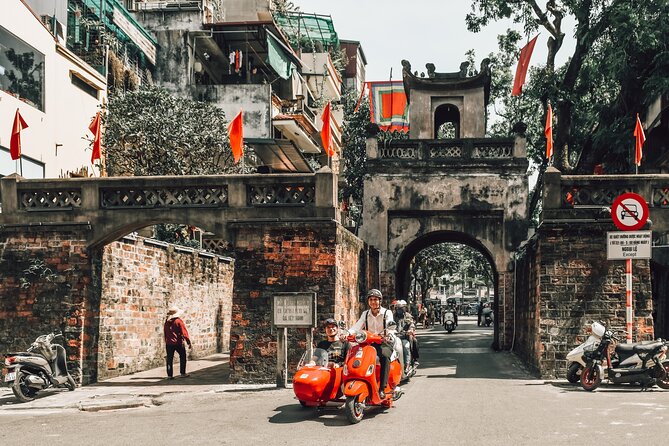
The Old City Gate receives only about 10 minutes, but it provides a sharp contrast. The guide explains its history while you see modern local life continuing around older architecture.
This is one of the route’s useful themes: Hanoi is not divided neatly into old and new. Motorbikes, shops, homes, historic walls, and narrow streets all share the same space. From a sidecar, you can see those changes as you move rather than treating them as isolated attractions.
Ten minutes is enough for an introduction and photographs, not a long stop. Keep your expectations practical. The purpose is to place the gate within the city’s living street network before you continue into the Old Quarter.
One hour through the Old Quarter
The Old Quarter receives the longest dedicated stop, about one hour. You go through famous streets, hear about the area’s historical culture, and enjoy traditional snacks.
This is likely to be one of the most rewarding parts of the tour because it combines movement, stories, and food. The Old Quarter is best understood at street level, where each lane has its own feel and purpose. A guide can point out details that are easy to miss when you wander without context.
The word snacks matters here. Lunch is included, but snacks and egg coffee are listed as extra purchases. You may want to budget for these treats, especially if tasting Hanoi food is one of your main reasons for booking.
The Old Quarter can also be the most hectic part of the ride. Watch your belongings, follow the guide’s instructions, and expect close traffic. The sidecar lets you see more streets than you could comfortably cover on foot, but it does not turn the Old Quarter into a calm sightseeing zone.
Hoan Kiem Lake and the final meal
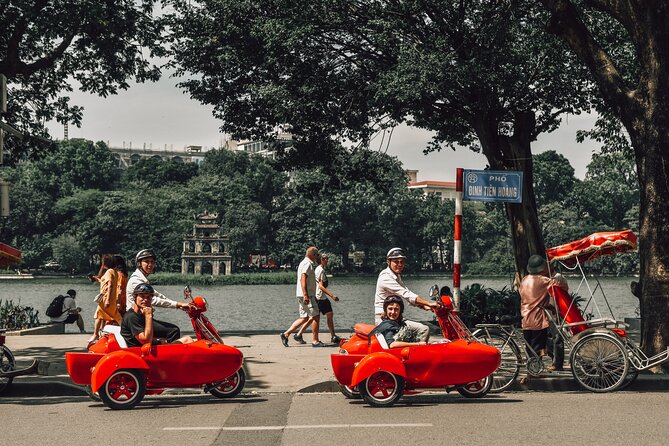
The last major sightseeing section circles Hoan Kiem Lake for photographs. You see Turtle Tower, The Huc Bridge, and the area around Ngoc Son Temple. The guide also explains the stories connected with Ngoc Son, Thap But, and the hero monument.
This is a fitting finish because Hoan Kiem Lake brings together Hanoi’s public life, legends, and recognizable views. The stop lasts about 50 minutes, so you have more than a quick pass-by. You return to the meeting point afterward and have authentic Vietnamese food.
The included lunch improves the value of the tour. Food is not an afterthought here; it is part of the experience’s purpose. Still, the details of the meal, including the restaurant and menu, are not specified, so do not book it expecting a particular dish.
Bottled water is included, which is practical on a four-and-a-half-hour ride. You may still want extra water in hot weather, though the supplied details only promise the included bottle.
Is $55 a fair price?
At $55, this is a reasonable half-day option if you value coverage and private transport. You are getting about 4 hours 30 minutes, a sidecar ride, an English-speaking guide, lunch, bottled water, and a route across several distinct parts of Hanoi.
The value is strongest for a first visit. Seeing the Opera House, Presidential Palace area, train street, citadel, temples, Old Quarter, and Hoan Kiem Lake in one outing would take more planning by yourself. You also avoid arranging transport between these areas.
The price is less compelling if you want long visits inside major monuments. Several stops are short, and the citadel is viewed from outside. You are paying for the city ride, explanations, food, and access to a broad range of neighborhoods, not for admission to a series of interiors.
Since this is a private activity, the value improves when shared by a small party. Only your group participates, so you are not paying for a large fixed group experience while receiving a generic route.
Who will enjoy this ride most?
I would recommend this tour to first-time visitors who want a quick but varied introduction to Hanoi. It suits people who enjoy street scenes, local food, short cultural stops, and moving through a city rather than spending hours in one building.
It is also a good fit if you want a guide to handle the route. The road traffic can be demanding, and the sidecar format lets you watch the city without having to drive.
Families can participate, but children must be accompanied by their parents. Service animals are allowed, and the activity is near public transportation. The information says most people can participate, though anyone uncomfortable with road traffic, heat, or an open vehicle should think carefully before booking.
I would choose something else if your priorities are a formal food tour, a long temple visit, a citadel admission, or a guaranteed Train Street train sighting. Those are not what this experience promises.
Booking details that matter
The activity lasts approximately 4 hours 30 minutes and ends where it begins. Mobile tickets are available, and confirmation is received at booking.
Free cancellation applies if you cancel at least 24 hours before the start time. Cancellations made within 24 hours are not refunded, and changes inside that window are not accepted. Because good weather is required, a weather cancellation offers either another date or a full refund.
I would avoid scheduling this as your airport-day plan. The route has many stops and depends on road conditions, so it deserves a relaxed half-day. Wear practical clothing for an open ride, carry money for optional snacks and egg coffee, and remember that Train Street conditions may shift.
Should you book the Hanoi Vespa sidecar tour?
Book it if you want breadth, local streets, and food in one private outing. The strong points are the broad route, the clean and comfortable sidecar described by the available feedback, the English-language guidance, and the chance to see Hanoi beyond its postcard landmarks.
Skip it if you want a quiet ride, long indoor visits, or a fixed plan around Train Street. For most first-time visitors, though, $55 is a fair way to get your bearings across Hanoi while leaving the driving and route planning to someone else.
FAQ
How long does the Vespa sidecar tour last?
The tour lasts approximately 4 hours 30 minutes and returns to the starting meeting point.
Where does the tour begin and end?
The stated meeting point is 3 P. Hàng Tre, Lý Thái Tổ, Hoàn Kiếm, Hà Nội. The activity ends back at the meeting point, and pickup is offered.
Is lunch included?
Yes. Lunch and bottled water are included. Snacks and egg coffee purchased at the market or Train Street are not included.
Does the tour enter the Imperial Citadel of Thang Long?
No. The tour stops at the North Gate, where the guide provides historical information and takes photographs. Admission inside the citadel is not part of the described stop.
Can children join the tour?
Yes, children can participate, but they must be accompanied by their parents.
What happens if the weather is bad?
The experience requires good weather. If it is canceled because of poor weather, you are offered a different date or a full refund. You can also cancel for a full refund up to 24 hours before the start time.
More Vespa Sidecar Tours in Hanoi
- Small Group Vespa Sidecar Tour in Hanoi
★ 5.0 · 8 reviews - Vespa Sidecar Tour By Night with Pickup
★ 5.0 · 1,803 reviews - Rome Morning Vespa Sidecar Tour in Rome with Cappuccino
★ 5.0 · 1,771 reviews - Rome: Highlights Vespa Sidecar Tour with Coffee and Gelato
★ 4.9 · 747 reviews
Fresh on the road in Hanoi
- Hanoi Evening Vespa Food Tour 04hrs★ 5.0 · 2 reviews
- HANOI MUST SEE SITES Vespa Tour★ 5.0 · 3 reviews
- Vespa Tour Hanoi Life Rustic★ 5.0 · 4 reviews
- Vespa Sidecar Sightseeing Tour in Hanoi★ 4.5 · 6 reviews
- Hanoi Vespa Tours Led By Women: Hanoi Vespa Tour City Half Day★ 5.0 · 5 reviews
- Hanoi Vespa Tours: Hanoi By Night Vespa Foodie Tours★ 5.0 · 6 reviews
- Bat Trang Ceramic Village Half-day Vespa Tour from Hanoi★ 5.0 · 8 reviews
- Small Group Vespa Sidecar Tour in Hanoi★ 5.0 · 8 reviews
Hanoi Vespa Tours, side by side.

Ninh Binh HIGHTLIGHT & HIDDEN GEM Tour From Hanoi: Skip-The-Line
Read our review →
Vespa City Tour &Train Street Female With Ao Dai Riders 4,5 Hours
Read our review →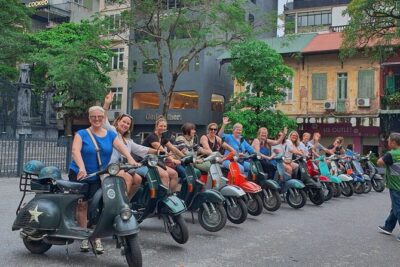
Hanoi Vespa Tours: Food + Culture + Fun on Army Vespa
Read our review →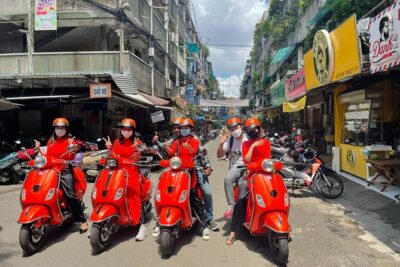
Vespa Female Ao Dai riders Night Street Food + See Train Street
Read our review →
Hanoi Vespa Countryside Tour With Female Ao Dai Riders Half Day
Read our review →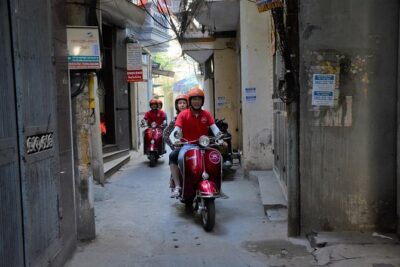
Hanoi Vespa Tours: Hanoi After Dark Vespa Food Tours
Read our review →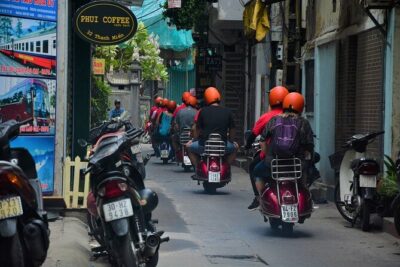
Hanoi Back Streets Vespa Tours: Hanoi Vintage Vespa Tours City
Read our review →