
Review · ROME
Rome Morning Vespa Sidecar Tour in Rome with Cappuccino
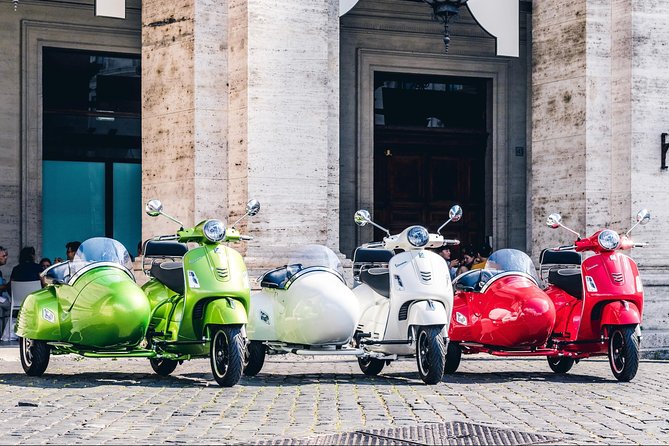
Rome is a difficult city to cover efficiently on foot. Its famous sights are scattered across hills, piazzas, narrow lanes, and busy avenues. This Vespa sidecar tour gives you a lively overview without asking you to drive through Roman traffic yourself. You sit back while a professional driver handles the streets and a guide such as Claudio, Luca, Matteo, or Barbara fills in the stories.
I like two things right away: the tour covers a remarkable amount of ground in about three hours, and it includes entry to the Pantheon, not just an outside look. The cappuccino and cornetto stop is another smart touch. The main drawback is that this is an overview, not a slow, detailed visit to every monument, and single bookings or odd-numbered groups may require you to share and swap seats.
Key points to know before booking
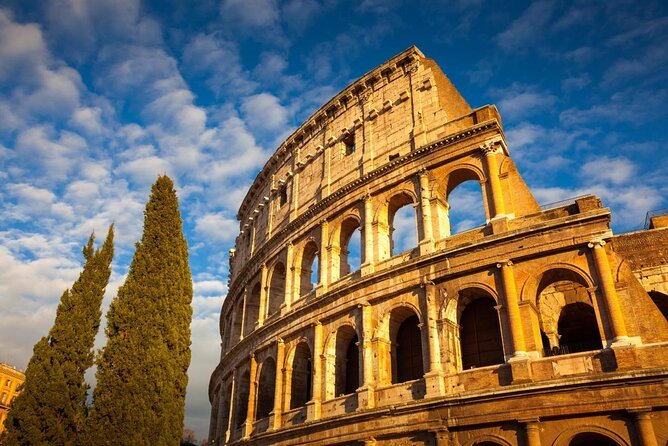
- A fast Roman overview: Cover major sights from Piazza della Repubblica to the Colosseum, plus neighborhoods and hilltop viewpoints.
- You do not drive: Professional drivers handle the Vespa and traffic while you listen through a headset.
- Pantheon admission is included: You get time inside one of ancient Rome’s best-preserved buildings.
- Breakfast comes with the ride: Expect a traditional cappuccino, cornetto, and water during the break.
- The sidecar arrangement matters: A Vespa carries two people, one in the sidecar and one behind the driver, with seat swaps at stops.
- Small-group format: The maximum group size is 12, with helmets and disposable sanitary covers supplied.
Why a Vespa sidecar works so well in Rome
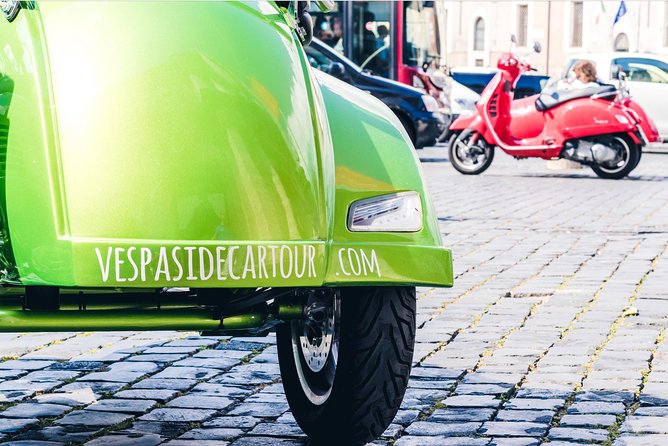
The great strength of this tour is not any single monument. It is the movement between them. Rome’s center can feel confusing when you are walking from one major sight to another, and a standard coach cannot reach many of the smaller streets. A Vespa can get closer to the action, then pull over for a photo or a short explanation.
You are not expected to operate the scooter. Your driver takes care of parking and road conditions, while the licensed guide narrates through headphones. That arrangement matters in Rome, where narrow lanes, scooters, buses, and sudden turns can make driving stressful even for confident riders.
The audio equipment also solves a common problem on moving tours. Instead of trying to hear a guide over traffic, you can follow the commentary as the group moves from one neighborhood to the next. Guides including Claudio, Luca, Matteo, Alessio, and Barbara have been praised for mixing historical detail with humor and for answering questions along the route.
You should still think of the experience as a city introduction. At the Trevi Fountain, for example, you get about 30 minutes, enough for photographs and a look around, but not enough to study every detail at a leisurely pace. The same applies to the Colosseum, which is a photo and explanation stop rather than an interior visit.
More Vespa Sidecar Tours in Rome:
- Vespa Sidecar Tour By Night with Pickup
★ 5.0 · 1,803 reviews - Rome: Highlights Vespa Sidecar Tour with Coffee and Gelato
★ 4.9 · 747 reviews - Rome Afternoon Sightseeing Vespa Sidecar Tour with Gourmet Gelato
★ 5.0 · 692 reviews
Starting at Piazza della Repubblica at 9 a.m.
The tour begins at Piazza della Repubblica, near Rome’s main railway area, at 9 a.m. This is a useful starting point because the square reflects Rome’s transformation after the city became the capital of unified Italy.
The center of the piazza is marked by the Fontana delle Naiadi, surrounded by grand buildings and the remains of the ancient Baths of Diocletian. The contrast is classic Rome: imposing nineteenth-century urban planning on one side, fragments of the ancient city on the other.
You have roughly 10 minutes here. That is enough to get oriented, meet the guide and drivers, and take in the scale of the square. Since the meeting point is close to public transportation, it should be practical for most people staying in central Rome, though you should allow time to arrive before the 9 a.m. departure.
Quirinal Hill and the Trevi Fountain
The next short stop is the Quirinal Palace, one of the official residences of Italy’s president. The palace has served popes, kings, and presidents, and it sits on the Quirinal Hill, the highest of Rome’s seven traditional hills.
The stop lasts about five minutes, so expect a brief explanation and an exterior view rather than a palace visit. It helps you understand Rome as a working capital, not only as an open-air museum.
The tour then reaches the Trevi Fountain, where you have about 30 minutes. This is one of the longer stops, and it should be. The fountain is large, theatrical, and easy to miss if you are rushing through the surrounding lanes. Its water source dates back to the Aqua Virgo aqueduct, while the fountain’s present form was completed in the eighteenth century.
The name Trevi comes from Tre Vie, meaning three streets, a reference to the point where three roads meet. You will have time for photographs and for taking in the sculpture from different angles. The area can be crowded, and the tour does not include a special private entry to the fountain area, so keep your belongings secure and stay aware of the group meeting time.
Inside the Pantheon, then coffee and a cornetto
The Pantheon is the tour’s most substantial historical visit. Admission is included, and the scheduled time is about 30 minutes. This is a real advantage because the building deserves more than a quick glance from the street.
Completed in its present form in the second century, the Pantheon was first a Roman temple. Its huge dome remains the architectural star, with the oculus at the center providing the building’s main natural light. You may see a shaft of sunlight move across the interior or notice rain entering through the opening, with drainage built into the floor.
The Pantheon is unusually well preserved, but the visit is still short. I would use the guide’s explanation to understand the basic design and later Christian use, then spend a few quiet minutes looking upward. If you want a full architectural study or extended time inside, plan to return on your own.
The breakfast stop adds a welcome pause. You receive a traditional cappuccino and cornetto, the Italian pastry often compared to a croissant, plus water. The break is practical as well as pleasant. Three hours on a moving scooter can feel surprisingly active, and a seated drink gives you a chance to warm up, ask questions, and reset before the second half.
Some groups have also appreciated small comfort touches such as blankets or hot water bottles in cooler weather. Those extras are not listed as guaranteed inclusions, so dress sensibly rather than counting on them.
More early-morning rides in Rome:
- Morning Vespa Sidecar Tour with Cappuccino
★ 5.0 · 3 reviews - Angkor Sunrise Vespa Tour / Tuk Tuk or Car
★ 5.0 · 87 reviews - Countryside Morning Life Vespa Tour
★ 5.0 · 37 reviews - Saigon Morning and Afternoon Adventure by Vespa
★ 5.0 · 3 reviews
Piazza Navona and St. Peter’s Square
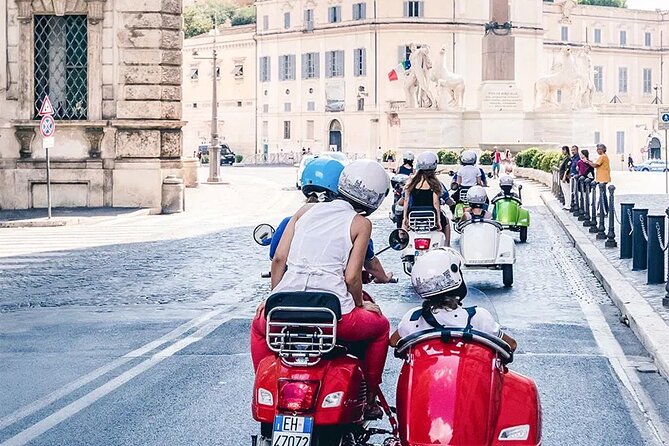
Piazza Navona follows as part of the city ride. The square occupies the site of an ancient Roman stadium and is shaped by its long, open form. Baroque Rome takes over here, especially in Bernini’s Fountain of the Four Rivers.
This is a good place to notice how Rome reuses its past. An ancient sporting venue became a public square, then a stage for fountains, churches, artists, cafés, and everyday city life. The tour’s moving format lets you see the setting without spending a large block of time here.
The route continues toward St. Peter’s Square in Vatican City. Bernini designed the great elliptical colonnade in the seventeenth century, creating a broad approach to St. Peter’s Basilica. The square is one of Rome’s most powerful urban spaces, and the sidecar gives you a close view without the effort of walking across the city from the historic center.
The tour does not include entry to St. Peter’s Basilica or the Vatican Museums. Think of this as an exterior orientation stop. If those interiors are on your list, book them separately and leave enough time after the morning ride.
Janiculum Hill for the best wide-angle view
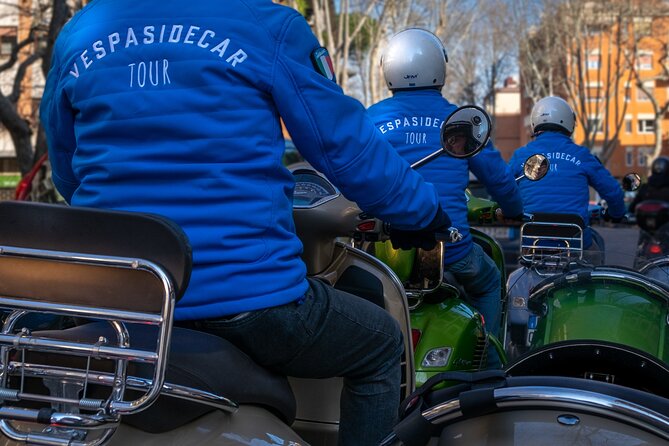
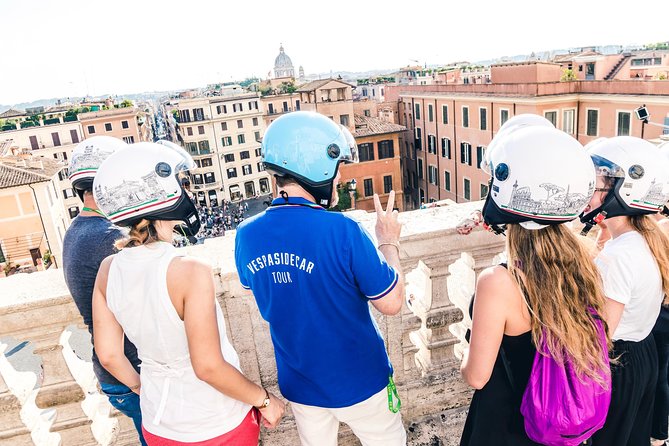
Terrazza del Gianicolo, on Janiculum Hill, is one of the tour’s best breaks from street level. The hill is not one of Rome’s seven ancient hills, but it is often treated as an eighth because of its position and importance.
The panoramic view is the reason to come. From here, Rome spreads below you in a way that is hard to grasp from a crowded piazza. You can pick out domes, rooftops, church towers, and the broad shape of the city.
Janiculum Hill also carries nineteenth-century political history. Giuseppe Garibaldi and his forces fought here during the defense of the Roman Republic, and sculptures along the paths recall that period. The stop lasts about 15 minutes, which gives you enough time for photos and a quick look around.
This is also where the ride’s pace feels most worthwhile. You have gone from tightly packed historic streets to an open view, then will return to the city center by a different route. If you like photography, keep your camera ready, but do not expect a long walking visit around the hill.
Trastevere, the Jewish Ghetto, and Rome’s everyday streets
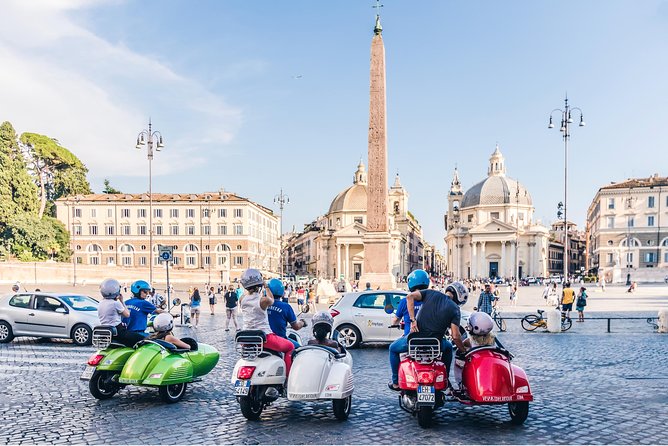
A drive through Rome’s more atmospheric neighborhoods gives the tour a useful change of tone. You pass through lanes, trattoria-lined streets, and the bohemian side of the city before reaching the Jewish Ghetto.
The value here is context. Rome is not only a chain of famous monuments. It is also laundry, food shops, old façades, small churches, and streets that bend around layers of earlier buildings. A coach tour can feel removed from this scale of the city. A Vespa sidecar puts you close to it without requiring you to navigate the maze yourself.
You will not get a long independent neighborhood walk during this section. The focus is on seeing and hearing as you move. If Trastevere or the Jewish Ghetto interests you, make a note of places to revisit later for lunch or an evening stroll.
Piazza Venezia and the Colosseum
The Monumento Nazionale a Vittorio Emanuele II dominates Piazza Venezia. Built to honor Victor Emmanuel II, the first king of unified Italy, the white monument is one of Rome’s most unmistakable landmarks.
The building also contains the Tomb of the Unknown Soldier, guarded by soldiers and marked by an eternal flame. The tour explanation helps connect the monument to the nineteenth-century creation of modern Italy, a chapter often overlooked when visitors focus only on ancient Rome.
The route then reaches the Colosseum, the Flavian Amphitheatre. This is generally the grand finale, and it is an effective one. Almost 2,000 years old, the amphitheater remains Rome’s clearest symbol of imperial power and public spectacle.
The tour takes you to the monument for viewing and photographs, but the included entrance fee applies to the Pantheon, not the Colosseum. If you want to go inside the Colosseum, arrange a separate ticket. The advantage of reaching it by Vespa is that you do not spend your morning walking between distant landmarks, leaving you with a clear sense of where the Colosseum sits in relation to the rest of Rome.
The itinerary also includes Basilica di Santa Maria Maggiore, one of Rome’s four major basilicas and the largest church dedicated to the Virgin Mary in the city. Depending on the route and timing, this may be an exterior viewing point or a drive-by explanation rather than a full interior visit. The tour ends back at the meeting point.
What the price includes at $163.26
At $163.26 per person, this is not a budget sightseeing ride. The value depends on how much you want from one morning.
You are paying for three hours of transport, a professional driver, a licensed guide, headset commentary, a helmet, a disposable helmet cover, breakfast, and Pantheon admission. You also save the time and effort of making your own way between a dozen major sights. For a first morning in Rome, that can be worth more than the cost of a basic walking tour followed by several taxi rides.
The tour is especially useful if you have limited time, if long walks are tiring, or if you want to identify places for later visits. It is less suitable if you prefer to spend an hour or more inside each monument. The Colosseum, Vatican, and many churches require separate plans.
The group maximum is 12 people, which keeps the experience smaller than a city coach. Still, it is not a private tour unless you book accordingly. The guide must serve the whole group, and stop lengths are fixed.
Seating, comfort, and safety details
Each Vespa can carry two passengers: one in the sidecar and one behind the driver. If you book one seat, you may share the vehicle with another person. For an odd-numbered booking, you agree to alternate seats at stops, so everyone has a chance to sit in the sidecar.
The sidecar is limited to 110 kilograms and a maximum height of 1.90 meters. The passenger riding behind the driver has a maximum weight of 118 kilograms. Children must be at least five years old, and children taller than 150 centimeters may sit behind the driver. Smaller children must use the sidecar and must be accompanied by an adult.
Helmets are supplied with sterilized disposable covers. Service animals are allowed, and most people can participate, but the tour is not permitted for pregnant travelers. If you have dietary needs, include them when booking. The breakfast includes cappuccino and cornetto, so specific requirements should be raised in advance.
Rome traffic is still Rome traffic. The drivers are professionals, but you are riding on an open vehicle, not inside a protected bus. Wear comfortable clothes, secure loose items, and bring a light layer. Good weather is required. You can cancel for a full refund up to 24 hours before departure, and if poor weather forces cancellation, you are offered another date or a full refund.
Who should book this Rome Vespa tour?
I would choose it for a first or second visit, especially if you want a quick sense of the city before deciding where to spend more time. Families with older children, couples, and active adults who dislike long walks are good matches.
It also suits anyone who likes a little theater in the way they see a city. The sidecars attract attention as they move through Rome, and you may find yourself photographed or waved at as part of the passing scene. That is fun, though anyone who wants a quiet, private ride should know that the experience is quite public.
I would not make it your only sightseeing plan if your priority is museum interiors, archaeological detail, or slow neighborhood exploration. Use it as a broad orientation, then return to the Pantheon, Colosseum, Vatican, Trastevere, or the Jewish Ghetto on your own.
Should you book it?
Book this tour if you want to see Rome quickly, comfortably, and with plenty of personality. The drivers remove the stress of Roman traffic, the guide keeps the history flowing through the headsets, and the route links ancient monuments with modern neighborhoods and hilltop views.
The strongest reasons are the amount of ground covered, the included Pantheon entry, and the simple pleasure of riding through Rome on a Vespa. Just understand the tradeoff: you get a memorable overview, not a full visit to every site. For a first morning in the city, I think that is a fair exchange and a strong use of three hours.
FAQ
Where does the Rome Vespa sidecar tour begin?
The tour begins at P.za della Repubblica, 41, 00185 Rome, Italy, at 9 a.m.
How long does the tour last?
The experience lasts approximately three hours and ends back at the meeting point.
Is the Pantheon entrance included?
Yes. The entrance ticket to the Pantheon is included in the tour price.
Are food and drinks included?
Yes. The tour includes a traditional cappuccino, a cornetto, and a water bottle.
Do I need to drive the Vespa?
No. Professional drivers operate the Vespas, so you can sit in the sidecar or behind the driver while listening to the guide.
Can children join the tour?
Children must be at least five years old and accompanied by an adult. Children taller than 150 centimeters may sit behind the driver. Otherwise, they must sit in the sidecar.
What happens if the weather is bad?
The tour requires good weather. If it is canceled because of poor weather, you can choose a different date or receive a full refund. You can also cancel for a full refund up to 24 hours before the start time.
Fresh on the road in Rome
- Vespa Tour with Professional Photographer★ 4.9 · 9 reviews
- Vespa Sidecar Tour : Rome by Night★ 4.1 · 7 reviews
- Rome: Vespa Tour with Gelato and Photos★ 4.9 · 7 reviews
- Vespa Tour – Explore Ancient Rome★ 5.0 · 5 reviews
- Food tour & Vespa tour & Photo tour! All included★ 5.0 · 2 reviews
- Vespa Scooter Tour “Rome as a Local”★ 5.0 · 12 reviews
- Vespa Sidecar Tour: Highlights of Rome★ 4.7 · 10 reviews
- Rome by night on Vespa★ 4.9 · 11 reviews
Rome Vespa Tours, side by side.
Rome: Explore the City by Vespa with an Optional Photoshoot
Read our review →
Rome Vespa Scooter Tour with Professional Photographer
Read our review →
Rome: Highlights Vespa Sidecar Tour with Coffee and Gelato
Read our review →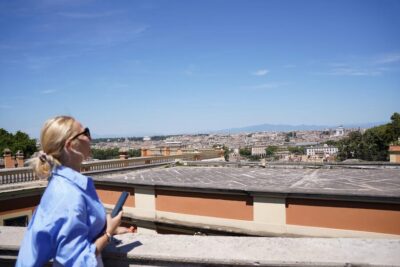
Rome: Vespa Ride with Pictures and Sweet Tastings
Read our review →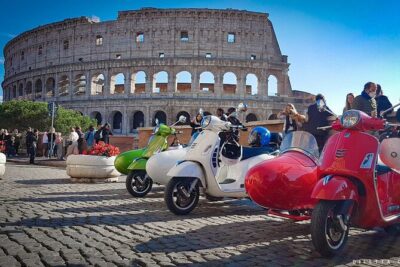
Rome Afternoon Sightseeing Vespa Sidecar Tour with Gourmet Gelato
Read our review →
Rome: Vespa Tour with Photo services Small‑Group Highlights
Read our review →
Vespa Sidecar Tour In Rome with Pickup, Drop-off, Gelato included
Read our review →This ride also sits on