
Review · PHNOM PENH
Phnom Penh: Silk Island Tour by Vespa with Tuk Tuk Available
Phnom Penh’s towers and traffic give way surprisingly fast to ferry ramps, rice fields, village roads, and homes where families still make food and cloth by hand. This Silk Island Vespa tour gives you a close look at that change, with an experienced driver handling the roads while you watch Cambodia roll past.
I like two things here: the Vespa makes it easy to reach small rural stops, and the tofu-skin and silk visits show real work rather than a polished cultural display. The main consideration is the ride itself. You sit on the back of a motorbike for several hours, so this is not a good choice if you have back problems or dislike open-road traffic.
At a glance: what this half-day tour delivers
- A Vespa ride beyond Phnom Penh: Travel with an experienced driver through city streets, ferry terminals, farming areas, and village roads.
- Two unusual working stops: See how a family produces dried tofu skin and how silk is woven by hand through a tradition carried across seven generations.
- A useful cultural mix: Visit a Buddhist temple, a local market, a secondary school, and rural homes rather than focusing on only one attraction.
- Short ferry crossings: The island journey includes several quick boat rides, adding a pleasant change of pace.
- Strong guide support: Guides such as TinTin, Kim, Lucky, Sok, Seang, and Smey are frequently praised for safe driving, clear English, and friendly explanations.
- Good half-day value: At $29 per person, the price covers hotel pickup and return, driver, guide, ferries, water, snacks, and a village donation.
Why Silk Island makes a smart Phnom Penh side trip
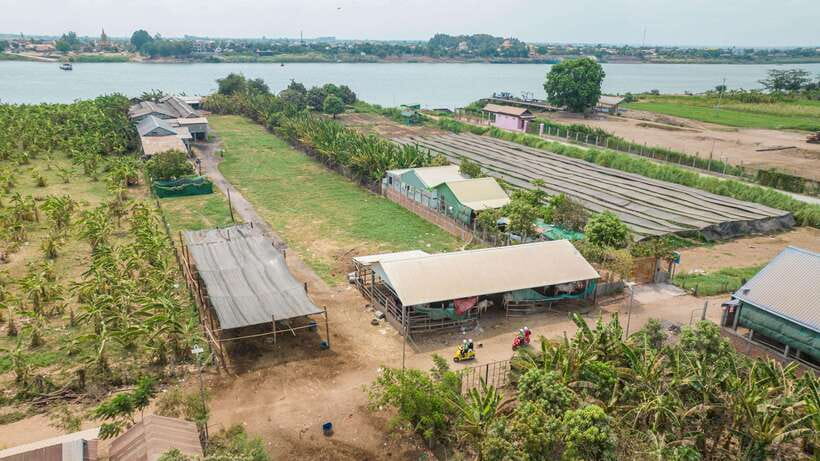
Silk Island, also known as Koh Oknha Tei, sits close to Phnom Penh but feels much quieter. The short distance matters. You do not lose a full day getting there, yet the setting changes from traffic and shopfronts to fields, village homes, workshops, and river crossings.
I like this tour for travelers who want more than Phnom Penh’s major museums and memorials. It gives you a look at how people work, worship, travel, and produce food outside the capital. You may see crops in the fields, local traffic around the market, and homes where craft skills are still passed from parent to child.
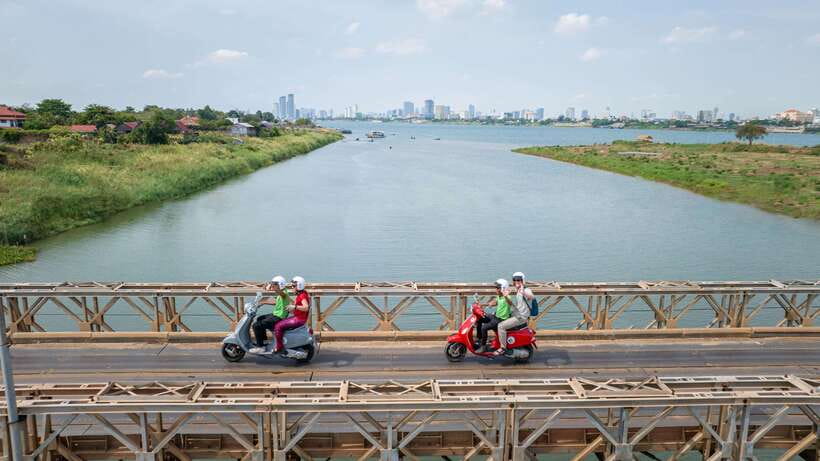
The city skyline can remain visible from rural roads, which creates one of the trip’s best contrasts. You are not far from Phnom Penh, but daily life feels less hurried. Several people who took the tour found this especially useful after visiting sites such as S-21 and the Killing Fields, since it offers a different view of Cambodia.
The timing is also sensible. The morning departure usually gets you back around 12:30 pm, after roughly four to five hours. Starting early helps with heat, and one morning departure was praised for having fresher air. An afternoon version may be available, and one family enjoyed seeing Phnom Penh at night afterward, but check the start time when booking.
More tuk-tuk rides in Cambodia:
- Siem Reap Countryside Vespa Tour / Tuk Tuk Available
★ 5.0 · 180 reviews - Siem Reap Evening Foodie Vespa Tour / Tuk Tuk Available
★ 5.0 · 174 reviews - Phnom Penh Silk Island Vespa Tour / Tuk Tuk Available
★ 5.0 · 102 reviews
Leaving Phnom Penh by Vespa
Pickup is arranged at your hotel lobby, and you should be ready about 15 minutes before departure. You ride behind an experienced driver rather than operating the Vespa yourself. Helmets are provided, and several guides are specifically praised for careful driving, clean and well-maintained bikes, and helping with helmets.
The ride is part of the experience, not simply transportation between stops. You pass through Phnom Penh, then continue toward the ferry terminal and the quieter roads beyond it. A Vespa is more exposed than a car or tuk tuk, so you can see and smell more of the surroundings. You also feel the heat, dust, traffic, and occasional rain more directly.
That tradeoff is worth considering. If you enjoy seeing a place at street level, the ride adds fun and character. If you prefer air conditioning, have back trouble, or feel uneasy on a motorbike, ask about the tuk tuk option when booking. The activity is advertised with tuk tuk availability, although the detailed program centers on Vespa transport.
The guides seem to take safety seriously. Drivers have slowed down for photographs, supplied rain coats during a downpour, and arranged a replacement Vespa when one bike developed a problem. Those details matter more than flashy equipment on a road-based tour.
Mongkol Serey Temple and a first lesson in Cambodian Buddhism
The first major stop is Mongkol Serey Temple, also described by some participants as the Golden Temple. You have about 30 minutes for a visit, guided explanation, and photographs.
This is not a long temple study, but it gives useful context before you reach the villages. Your guide can explain elements of Cambodian Buddhism and help you understand what you are seeing. The stop also breaks up the ride early in the morning.
Dress respectfully at the temple. The supplied information does not set out a specific dress code, but modest clothing is the sensible choice at a Buddhist site. Use this stop to ask questions. The tour works best when you treat the guide as a local interpreter, not just a person leading you from one photo stop to the next.
Ferry crossings and the move to island life
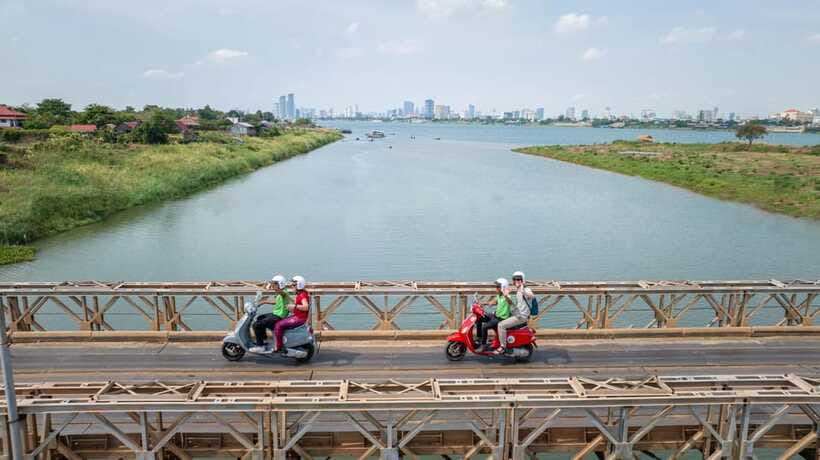
The journey to Silk Island includes short ferry trips, usually only a few minutes each. These crossings are simple, practical transport, but they add a memorable rhythm to the morning. You move from Vespa to boat, watch the river, then continue by road on the other side.
The ferry terminal itself is listed as a guided stop of about 30 minutes. This gives your guide time to explain the route and the surrounding area rather than rushing you straight onto a boat.
There is no luxury cruise here. You are using local transport, and terminals can feel busy or rough around the edges. That is part of the appeal, but you should be ready to follow instructions while boarding and unloading. The reward is a changing view of Phnom Penh and the river, followed by quieter roads on the island.
More Vespa Tours in Cambodia:
- Phnom Penh Evening Foodie Vespa Tour / Tuk Tuk Available
★ 5.0 · 99 reviews - Angkor Sunrise Vespa Tour / Tuk Tuk or Car
★ 5.0 · 87 reviews - Siem Reap Food Tour by Vespa
★ 5.0 · 85 reviews - Floating Village Sunset Boat Vespa Tour / Tuk Tuk Available
★ 5.0 · 58 reviews
Koh Oknha Tei Market: daily life in motion
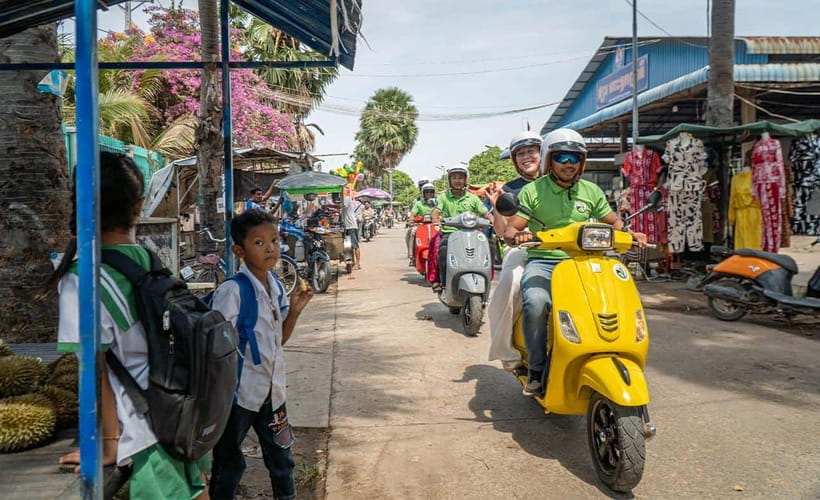
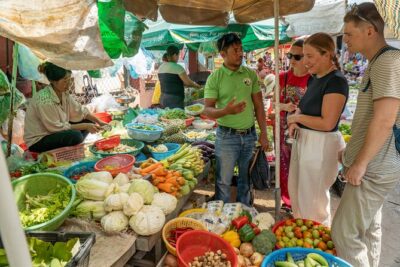
The market visit lasts about an hour, making it one of the longer stops. You can look around, learn about local foods and routines, and shop if something catches your eye.
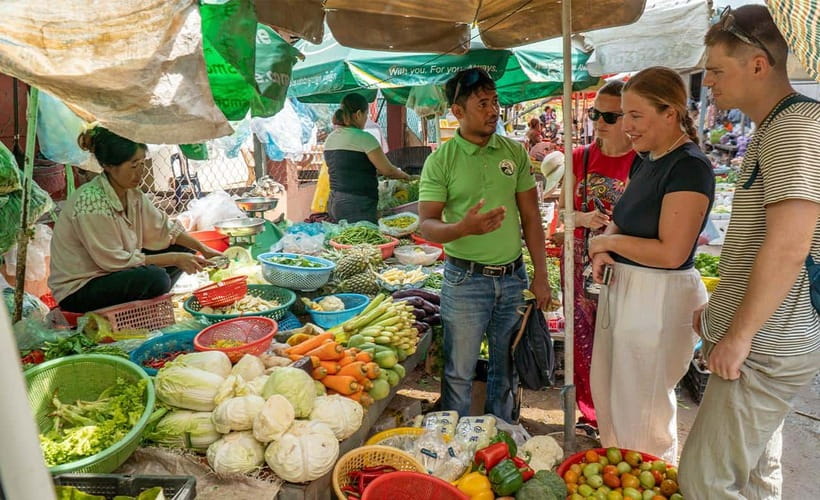
I like the market because it gives the tour a practical center. Silk weaving can feel like a special craft demonstration, but the market shows what people buy, sell, cook, and eat in ordinary life. Guides explain the foods and may introduce you to local fruit and snacks. Fresh coconut and fruit were particular favorites on several outings.
This is a good place to slow down and ask what you are seeing. A guide such as Lucky or TinTin can explain unfamiliar foods and connect the market to everyday life in Cambodia. You may also have a chance to try local produce, but personal purchases are not included in the $29 price.
The market is not a staged tourist attraction. That means conditions may be warm, crowded, noisy, or less tidy than a modern food hall. Bring sunscreen and sunglasses, and keep your expectations practical. The value is in seeing a working market, not in finding a carefully arranged display.
The tofu-skin workshop, a small stop with real substance
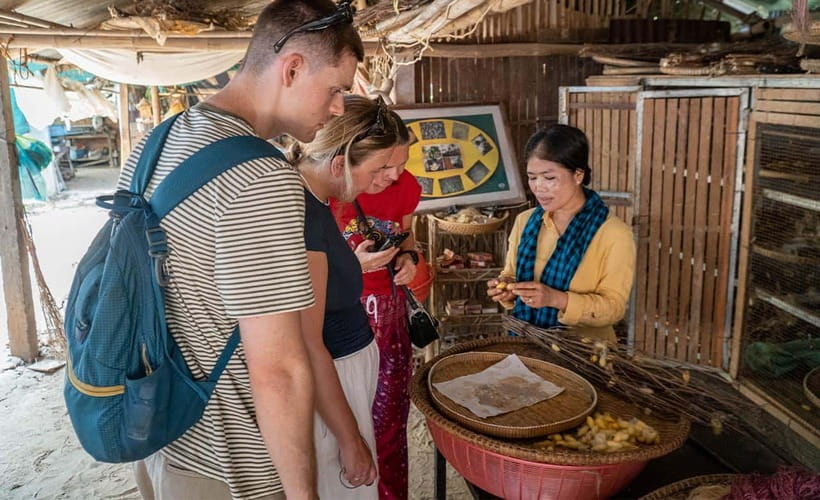
One of the tour’s most distinctive visits is a family-run business producing dried tofu skin. This is a working food enterprise, and the process gives you a look at the time and labor behind a familiar ingredient.
The stop is often singled out as a highlight because it feels unexpected. You can see how the tofu skin is prepared and dried, learn how the business operates, and in some cases try freshly made tofu. One person even discovered during the visit that tofu skin is edible, a small detail that shows how hands-on and surprising this stop can be.
I find this more interesting than a generic factory tour because the setting is family-run and connected to local life. You are not simply shown a finished product. You get a sense of the work involved and the conditions people manage each day.
Do not expect a large industrial facility or a long technical demonstration. The visit is local and modest. That is exactly why it works. Guides explain the process in plain language, and the stop gives you something concrete to remember from the day.
Silk Island and a seven-generation weaving tradition
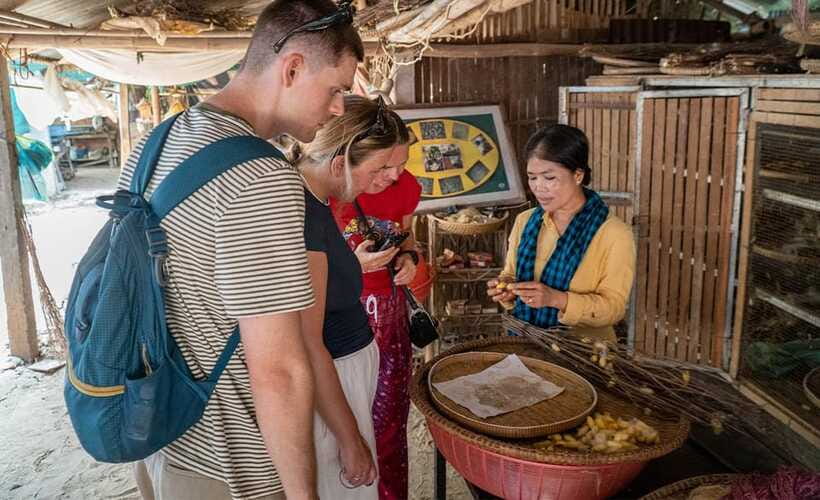
The main Silk Island visit lasts about 90 minutes. Here, you learn about silk production and hand weaving from local makers. One family’s craft has been passed through seven generations, giving the visit a clear connection between household work, skill, and cultural continuity.
You may see silk-making methods, looms, and finished creations. The process is more than a shopping stop. It shows how a craft is taught within families and how design and technique change from one generation to the next.
The visit can be especially rewarding if you are interested in textiles, design, or small-scale production. One point to keep in mind is that you may not see every stage of silk production. A past participant hoped to see a silkworm and moth firsthand, but that was not part of the visit. The emphasis is on weaving and the family’s work, not a complete biology lesson.
You may have the chance to buy a scarf or another silk item. Some people appreciated being able to support the makers directly, while others liked that there was no hard selling at the stops. You can browse without feeling that you must purchase something, but bring personal spending money if you want a handmade souvenir.
Koh Oknha Tei Secondary School and the village roads
The secondary school visit is scheduled for about 30 minutes. The provided details do not promise a particular classroom activity, so think of this as a brief community stop rather than a formal school program.
Its value is in showing that Silk Island is a lived-in community, not an open-air museum built for visitors. Your guide can explain how the school fits into local life and answer questions about the area. As always, be considerate around students and avoid treating the school simply as a photo backdrop.
After the school and silk visit, the road itself becomes part of the story. You pass farming areas and village homes, with the guide pointing out crops, local work, and ways families live. The pace is slow enough for photographs, and drivers have adjusted their speed so people could record short videos without rushing.
Akreiy Ksatr Village and the final snack break
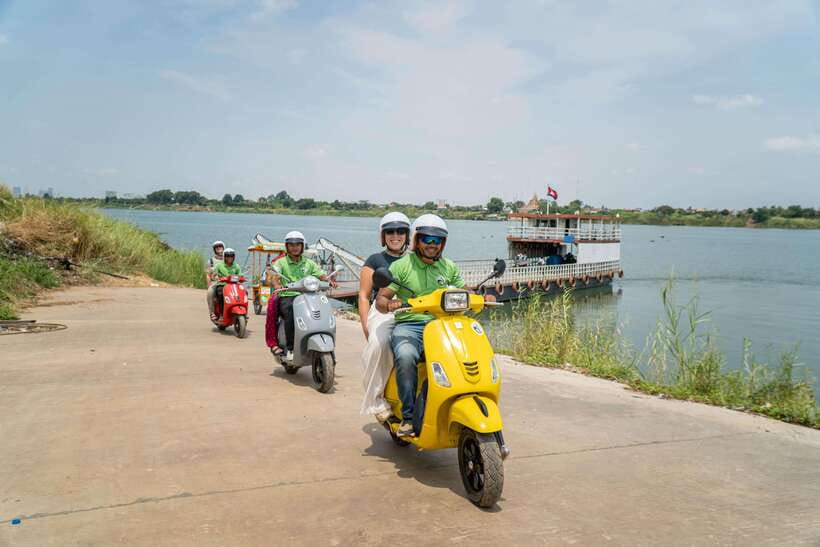
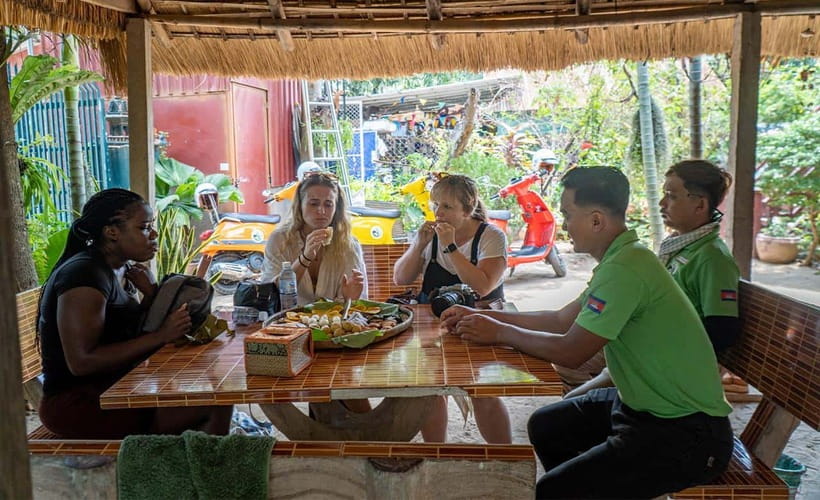
The last substantial stop is Akreiy Ksatr Village, with about an hour for a break, photographs, and local snacks. This is a relaxed way to finish the rural portion of the trip.
The village visit gives you time to meet local people and see daily life at close range. Several participants valued the welcome they received from families and the chance to understand how people live outside Phnom Penh. The tour includes a village donation, which gives some practical support to the communities you visit.
Keep your approach respectful. You are entering a working community, so ask before photographing people or homes. The guide can help with introductions and explain what is appropriate.
The snack break also gives you a chance to cool down and talk with your guide. This is where the tour can become more personal. Guides including Kim, Sok, Somnang, and TinTin have been praised for answering questions about Cambodian religion, farming, islands, culture, and city life.
Guides, group size, and the human side of the tour
The tour includes an English-speaking guide as well as a Vespa driver. In smaller groups, one guide may also drive, while larger groups may use several drivers. Names frequently associated with the experience include TinTin, Kim, Lucky, Sok, Seang, Smey, Somnang, Lee, and Nuth.
The strongest pattern is clear: people value guides who are friendly, careful, and willing to explain rather than simply recite facts. Kim and TinTin are often praised for warmth and clear English, while Lucky is noted for attentive driving and detailed explanations. Lee, despite being a newer guide, was appreciated for treating his guest with care.
A private group is available. Solo visitors may still find the trip comfortable, and one solo participant effectively had a private outing because no one else had booked that day. Group size can change, so confirm what applies to your date if privacy matters.
The advertised rating is 4.9 from 152 ratings, and 96 percent of participants gave the transport a perfect score. Those figures are useful, but the practical point is more important: safe drivers and good communication make a motorbike tour much easier to enjoy.
What to bring and who should book
Bring sunglasses and sunscreen. Wear clothes suited to heat, outdoor riding, and temple visits. Water and a snack are included, but you may want extra money for market purchases, silk goods, or personal expenses.
I would choose this tour if you:
- Want to see rural life without giving up a full day
- Enjoy motorbike travel but do not want to drive yourself
- Care about food production, weaving, and local work
- Have already seen Phnom Penh’s main historic sites and want a different side of the city
- Like asking questions and meeting people in small community settings
I would think twice if you have back problems, dislike motorbikes, or want a quiet sightseeing trip with little movement. The ride is central to the experience, and the roads, ferries, weather, and market conditions are part of the package.
Is $29 good value?
At $29 per person, the price is strong for a four to five-hour private or small-group outing. You receive hotel pickup and return, an English-speaking guide, an experienced Vespa driver, helmets, ferry trips, water, a snack, and a village donation.
You also get several distinct experiences: a temple, a ferry journey, a market, a food workshop, a school, silk production, and a village visit. Many paid tours offer only one main attraction. This one packs in variety without requiring another taxi or guide.
Personal spending is not included, so budget separately for market items or silk products. Still, you do not need to buy anything to get value from the visit. The strongest part is the access to places and people you would be unlikely to reach as easily on your own.
Free cancellation up to 24 hours before departure and reserve-now, pay-later booking add useful flexibility. Pickup is optional in the booking details, but hotel pickup and drop-off are included when selected.
Should you book the Silk Island Vespa tour?
Book it if you want a lively, practical look at Cambodia beyond central Phnom Penh. The combination of Vespa riding, short ferry crossings, tofu production, silk weaving, temple life, local snacks, and village roads gives you a fuller picture than a single museum visit.
I would especially recommend it for a second day in Phnom Penh, after you have seen the city center and are ready for open space and rural communities. Go in the morning if you want cooler air and an early return.
Skip it if a motorbike seat sounds uncomfortable or if you need a fully climate-controlled vehicle. For most visitors who are happy on the back of a Vespa, $29 buys an unusually varied half-day and a direct look at how close rural Cambodia is to the capital.
FAQ
How long does the Silk Island Vespa tour last?
The tour lasts about four to five hours. A typical morning departure returns to Phnom Penh around 12:30 pm.
Where does the tour begin?
Pickup is arranged from Phnom Penh, with guests asked to meet in the hotel lobby about 15 minutes before departure.
Is hotel pickup and drop-off included?
Yes. Hotel pickup and drop-off are included in the activity details.
Is the tour conducted in English?
Yes. The tour includes a live English-speaking guide.
Do I drive the Vespa myself?
No. You ride on the back of a Vespa with an experienced driver.
Are ferry rides included?
Yes. Ferry trips to Silk Island are included in the price.
What places does the tour visit?
Stops include Mongkol Serey Temple, the Silk Island ferry terminal, Koh Oknha Tei Market, Koh Oknha Tei Secondary School, Silk Island, and Akreiy Ksatr Village.
Is food included?
Water and a snack are included. You may also try local fruit or food during the visits, while personal purchases are not included.
Can I cancel the booking?
Yes. You can cancel up to 24 hours in advance for a full refund. Reserve-now, pay-later booking is also available.
Fresh on the road in Cambodia
- Siem Reap City Tour By Vespa★ 5.0 · 3 reviews
- Phnom Penh: Highlights Tour Including National Museum★ 5.0 · 9 reviews
- Phnom Penh: Walking Tour, Food Tour & Sunset Cruise★ 4.9 · 4 reviews
- Siem Reap Countryside Sunset Vespa Tour or Tuk Tuk★ 4.5 · 3 reviews
- Phnom Penh: Morning Foodie, Market Walking & Street Art Tour★ 5.0 · 3 reviews
- Angkor Wat: Guided Vespa Tour / Tuk Tuk or Car★ 5.0 · 12 reviews
- Floating Village Sunset boat Vespa Tour / Tuk Tuk Available★ 5.0 · 6 reviews
- Siem Reap: Evening Foodie Vespa Tour / Tuk Tuk Available★ 5.0 · 11 reviews
Phnom Penh Vespa Tours, side by side.
Phnom Penh Silk Island Vespa Tour / Tuk Tuk Available
Read our review →
Phnom Penh Evening Foodie Vespa Tour / Tuk Tuk Available
Read our review →
Phnom Penh Silk Island Haft Day Tour – Top Rating Experience
Read our review →
Phnom Penh Evening Food Tour -On Promotion Price limit Offer
Read our review →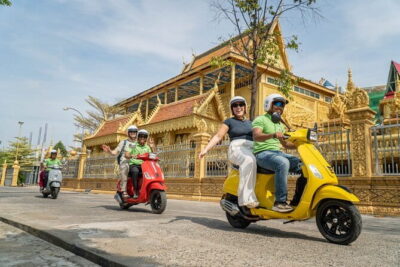
Phnom Penh: Highlights Tour Including National Museum
Read our review →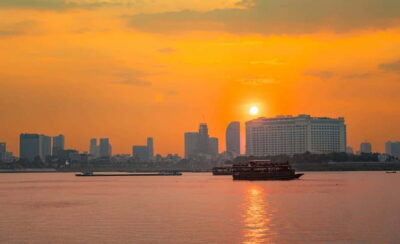
Phnom Penh: City & Silk Island Haft Day or Full Day Tour
Read our review →
Phnom Penh: Walking Tour, Food Tour & Sunset Cruise
Read our review →This ride also sits on